
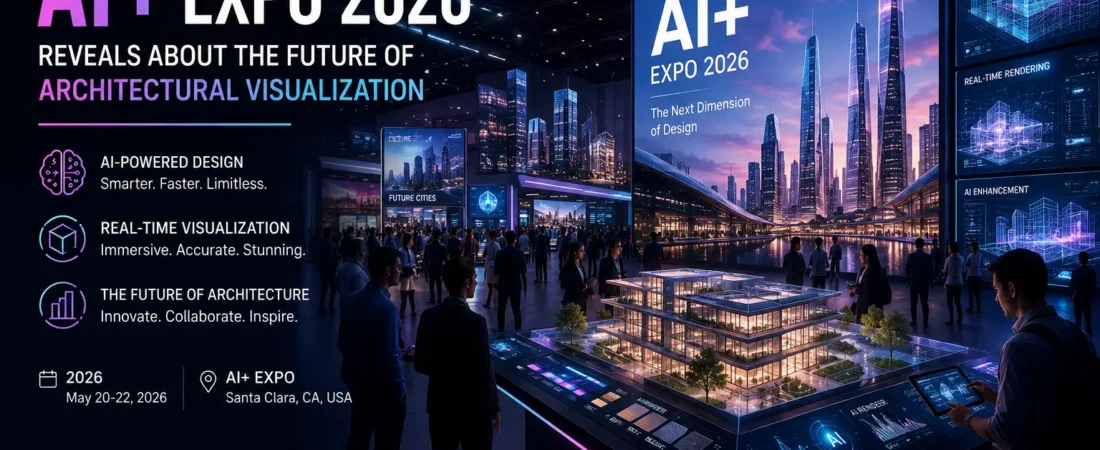
What AI+ Expo 2026 Reveals About the Future of Architectural Visualization
AI+ Expo 2026 highlights one of the biggest transformations currently happening across architecture, design, and visualization: the rapid integration of artificial intelligence into creative workflows. As AI-powered rendering, image generation, concept development, and design automation continue to evolve, architectural visualization is entering a new era where speed, creativity, realism, and workflow efficiency are being redefined. For architects, SketchUp users, visualization artists, and design studios, AI+ Expo 2026 provides valuable insight into the technologies that are shaping the future of architectural communication.
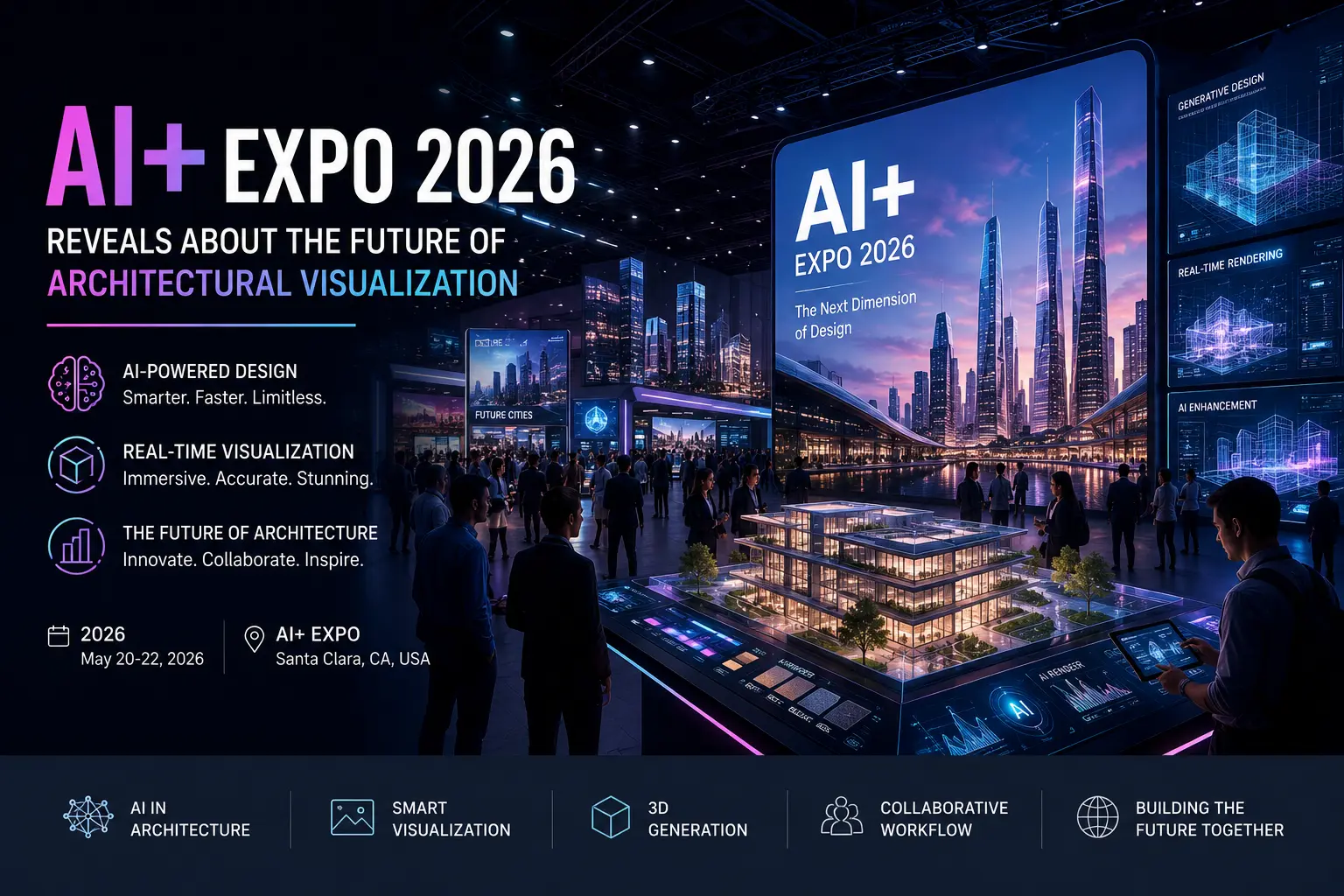
Why AI+ Expo 2026 Matters for Architects and Designers
Artificial intelligence is no longer a future concept inside architecture. It is already changing how architects generate ideas, create renders, communicate concepts, optimize workflows, and develop design presentations.
AI+ Expo 2026 brings together technology leaders, AI innovators, creative professionals, software companies, researchers, and industry experts to explore how artificial intelligence is transforming multiple industries—including architecture, visualization, design, urban planning, and digital content creation.
For architectural professionals, the event provides an opportunity to understand which AI technologies are becoming practical tools rather than experimental concepts.
The Rise of AI in Architectural Visualization
Architectural visualization has always depended on technology. From hand drawings and CAD software to 3D rendering engines and real-time visualization platforms, the industry continuously evolves through new tools.
AI now represents the next major shift. Modern AI systems can generate conceptual imagery, improve rendering workflows, accelerate design exploration, create mood studies, assist with storytelling, and help designers communicate ideas faster than traditional workflows alone.
Rather than replacing visualization artists, AI is increasingly functioning as a creative assistant that enhances productivity and expands design possibilities.
Key AI Trends Impacting Architectural Visualization
Faster concept visualization, photorealistic image generation, mood development, and design presentation workflows.
Converting sketches, references, and ideas into architectural concepts and visual studies.
Reducing repetitive production tasks while improving efficiency and speed.
Generating design variations, architectural concepts, and visual directions more rapidly.
How AI Is Changing the Design Process
Traditional architectural workflows often require significant time for concept development, rendering, iteration, and presentation. AI-assisted tools are helping architects accelerate these processes while maintaining creative control.
Designers can now explore multiple visual directions, generate atmosphere studies, test materials, create presentation imagery, and communicate concepts more efficiently than ever before.
This shift is particularly important during early design stages where rapid experimentation often leads to stronger outcomes.
AI Rendering and SketchUp Workflows
One of the most significant developments discussed across AI-focused architecture events is the integration of AI rendering into existing design software.
SketchUp users increasingly combine traditional modeling workflows with AI-assisted rendering systems to produce visual results faster while preserving design flexibility.
Modern AI workflows support:
- Concept rendering
- Architectural mood generation
- Interior visualization
- Material exploration
- Presentation imagery
- Design communication
Professionals interested in these workflows can explore:
The Future of Architectural Visualization
AI+ Expo 2026 suggests that the future of architectural visualization will be defined by hybrid workflows that combine human creativity with intelligent systems.
Architects will continue to make design decisions, develop concepts, and shape spatial experiences. AI tools will increasingly support rendering, image generation, design exploration, presentation development, and visual communication.
This collaboration allows professionals to focus more on creativity, design quality, and storytelling while reducing technical bottlenecks.
AI, Future Cities, and Smart Design Systems
AI technologies are also becoming relevant to larger urban systems. Future cities increasingly depend on data analysis, predictive modeling, environmental optimization, mobility systems, and digital infrastructure.
Architects who understand AI workflows may gain advantages when working on complex projects involving urban planning, smart cities, sustainability strategies, and large-scale development.
This broader perspective demonstrates why AI is becoming increasingly connected to architecture, urban design, and future city development.
Architecture Events 2026: How AI+ Expo Connects to Global Design Trends
AI+ Expo 2026 does not exist in isolation. Its themes connect directly with broader conversations taking place across major architecture and design events throughout the year.
Related architecture events include:
-
London Festival of Architecture 2026
-
AIA Conference on Architecture & Design 2026
-
3daysofdesign Copenhagen 2026
-
UIA World Congress of Architects 2026
Together, these events reveal how sustainability, AI workflows, visualization technologies, future cities, architecture innovation, and digital transformation are becoming increasingly connected across the design industry.
Why AI Skills Are Becoming Essential for Designers
As artificial intelligence becomes more integrated into architecture and visualization workflows, professionals who understand AI tools will likely gain significant advantages.
Learning how to combine SketchUp, rendering platforms, visualization software, and AI-assisted systems allows designers to create stronger presentations while improving workflow efficiency.
The goal is not simply to work faster. The goal is to communicate ideas more effectively while expanding creative possibilities.
Professional Development and Future Workflows
Architecture studios, visualization artists, interior designers, and creative agencies are already adapting to AI-assisted workflows. Future competitive advantages will increasingly depend on how effectively professionals integrate these technologies into their design process.
Continuous learning, experimentation, and workflow development will become essential as AI capabilities continue to expand.
Architects who embrace innovation while maintaining strong design thinking will be best positioned for long-term success.
AI in Architecture: Estimated Workflow Impact
Based on industry discussions, visualization trends, and emerging AI adoption patterns, the biggest gains from AI workflows are expected in rendering speed, concept exploration, presentation development, and visual communication.
::contentReference[oaicite:0]{index=0}
Final Thoughts
AI+ Expo 2026 provides a valuable glimpse into the future of architectural visualization and creative technology. The event highlights how artificial intelligence is rapidly becoming integrated into rendering workflows, concept development, design communication, and visualization systems.
For architects, SketchUp users, visualization artists, students, and design studios, understanding these technologies is becoming increasingly important. AI is not eliminating creativity—it is creating new opportunities to work faster, communicate better, and explore more design possibilities.
As AI continues to evolve, the professionals who successfully combine human creativity, design expertise, visualization skills, and intelligent workflows will be best prepared for the future of architecture.
Explore AI-Powered Architecture Workflows
Discover advanced SketchUp resources, AI rendering systems, visualization techniques, architectural tutorials, and professional learning materials created for architects, designers, and 3D artists.