
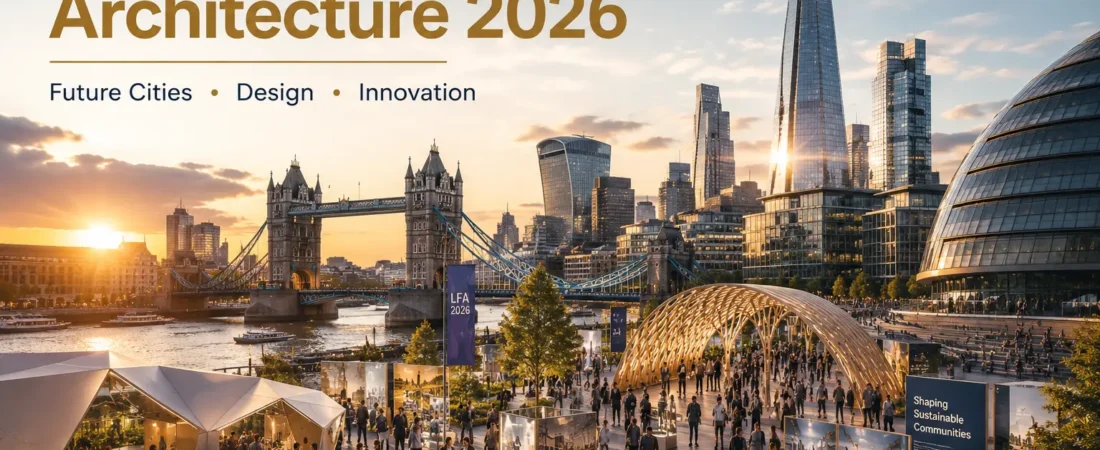
London Festival of Architecture 2026: Future Cities, Belonging, and the Next Wave of Urban Design
The London Festival of Architecture 2026 is one of Europe’s most important architecture events, bringing together architects, designers, urban planners, students, creative studios, and built-environment professionals. Running throughout June under the theme of “Belonging,” LFA 2026 creates a powerful platform for exploring sustainable architecture, future cities, public space, community-led design, architectural visualization, and the role of technology in shaping better urban environments.

Why London Festival of Architecture 2026 Matters
London Festival of Architecture 2026 is more than a cultural design event. It is a city-wide conversation about how architecture can respond to the most urgent challenges facing modern cities: climate change, housing pressure, urban density, social inclusion, digital transformation, public space, and the emotional connection people have with the places they live.
For architects and designers, the festival is especially important because it connects real-world urban issues with practical design thinking. Instead of focusing only on buildings as isolated objects, LFA 2026 encourages professionals to think about architecture as a system of relationships: between people, streets, homes, neighbourhoods, infrastructure, culture, and identity.
This makes the event highly relevant for anyone interested in architecture trends 2026, sustainable architecture, urban design, future cities, smart cities, public realm design, and architectural visualization. It is also a strong reference point for SketchUp users and 3D visualization artists who want to understand how global design conversations can influence digital modeling, rendering, and presentation workflows.
Key Themes at London Festival of Architecture 2026
The 2026 theme explores how buildings, streets, public spaces, and neighbourhoods can create a stronger sense of identity, inclusion, memory, and community.
LFA 2026 creates space to discuss how London and other global cities can become more resilient, walkable, accessible, sustainable, and people-centered.
The festival highlights the growing importance of low-carbon design, adaptive reuse, circular construction, green infrastructure, and climate-conscious architecture.
Digital tools, AI-assisted design, visualization workflows, and smart city thinking are becoming essential parts of the modern architectural process.
The 2026 Theme: Belonging
The official theme for London Festival of Architecture 2026 is “Belonging.” This is a powerful and timely concept because architecture is not only about form, structure, or aesthetics. It is also about how people feel in a place, who feels welcome, whose stories are represented, and how cities can support different communities.
In urban design, belonging can be expressed through accessible public spaces, inclusive housing, cultural memory, neighbourhood identity, and community participation. A well-designed city is not only visually impressive; it also supports social connection, safety, comfort, and dignity.
For architects, the theme encourages a deeper question: how can design create places where people feel they are part of something? This is particularly important in major cities like London, where migration, density, heritage, affordability, and redevelopment constantly reshape the urban experience.
Architecture Trends 2026: What Designers Can Learn from LFA
One of the strongest reasons to follow London Festival of Architecture 2026 is the insight it provides into emerging architecture trends. The festival brings together exhibitions, talks, workshops, tours, installations, and design interventions that reveal where the industry is moving.
Several trends are especially important for architects and visualization professionals:
- Sustainable architecture: more focus on low-carbon materials, energy performance, passive design, and climate-responsive planning.
- Adaptive reuse: transforming existing buildings instead of demolishing and rebuilding from zero.
- Public space innovation: designing streets, squares, and urban spaces that support social life and community interaction.
- Human-centered design: creating places based on user experience, accessibility, comfort, and emotional connection.
- Digital design workflows: using 3D modeling, rendering, AI tools, and visualization to communicate ideas more clearly.
These trends are not separate from daily architectural practice. They directly influence how architects model projects, present design options, and communicate with clients. For example, a designer using SketchUp can study LFA themes and translate them into better concept models, stronger urban diagrams, more meaningful renders, and clearer design storytelling.
How LFA 2026 Connects to SketchUp, AI Rendering, and Visualization
London Festival of Architecture 2026 is a physical city-wide event, but its ideas are strongly connected to digital workflows. Today, architects use 3D modeling and visualization tools not only to show final results, but also to explore design ideas, test spatial relationships, and explain concepts to clients or communities.
SketchUp remains one of the most practical tools for fast architectural modeling, urban massing, interior design, landscape concepts, and early-stage visualization. When SketchUp is combined with AI rendering tools, designers can quickly turn concept models into compelling visuals that communicate atmosphere, scale, materials, and spatial experience.
For designers who want to strengthen this workflow, Nice Towers provides useful resources on AI rendering for SketchUp, SUAPP AI workflows, and professional SketchUp 3D models that can support faster architectural visualization.
Future Cities and the Role of Public Space
A major part of LFA 2026 is the conversation around future cities. In the coming years, cities must become more sustainable, more inclusive, and more adaptable. Architecture will play a central role in this transformation.
Future cities are not only defined by tall buildings or advanced technology. They are defined by how well they serve people. Walkable streets, public gardens, mixed-use neighbourhoods, accessible transport, cultural spaces, and flexible community infrastructure are all essential parts of a successful urban future.
London is an ideal place for this conversation because it combines historic architecture with contemporary development. The city constantly negotiates between heritage and innovation, density and liveability, global identity and local neighbourhood character. LFA 2026 uses this context to ask how architecture can create better places for everyone.
Sustainable Architecture and Climate-Conscious Design
Sustainability is no longer a secondary topic in architecture. It is now one of the most important drivers of design decisions. London Festival of Architecture 2026 is expected to continue the wider industry conversation around low-carbon design, reuse, environmental responsibility, and long-term urban resilience.
Sustainable architecture includes more than energy-efficient buildings. It also includes responsible material choices, renovation of existing structures, passive environmental strategies, biodiversity, water management, and the design of healthy indoor and outdoor environments.
For 3D artists and visualization specialists, sustainability also changes the way projects are presented. Renders and diagrams increasingly need to communicate environmental performance, natural light, green space, material logic, and human comfort. This means visualization is becoming more than a marketing tool; it is becoming a way to explain responsible design.
Why This Event Is Important for Architecture Students and Young Designers
London Festival of Architecture 2026 is also valuable for architecture students, emerging designers, and young professionals. It offers access to real conversations about the future of the built environment, outside the limits of academic studios or traditional office practice.
Students can learn how professional architects respond to social, environmental, and urban challenges. They can also observe how exhibitions, installations, and public events communicate complex design ideas in simple, visual, and engaging ways.
For young designers, this is a reminder that strong architectural communication matters. Learning tools like SketchUp, AI rendering, and digital presentation can help transform ideas into clear visual stories. Nice Towers supports this learning path through online SketchUp courses and practical tutorials focused on real-world workflows.
Architectural Visualization as a Tool for Better Communication
One of the most important lessons from architecture events like LFA is that good design must be communicated clearly. Whether an idea is about public space, housing, sustainability, or urban identity, people need to understand it visually.
Architectural visualization helps bridge the gap between technical design and public understanding. Through renders, diagrams, animations, and concept images, architects can show how a place will feel, how people will use it, and why a design decision matters.
This is especially relevant in community-led design. If architecture is about belonging, then communication must be accessible. High-quality visuals can help clients, communities, and stakeholders participate more meaningfully in the design process.
Designers who want to improve their digital presentation skills can explore more about professional workflows in the Nice Towers guide to SketchUp workflow.
How AI Is Changing the Future of Architecture Events
AI is becoming increasingly relevant to architecture events because it changes how designers generate ideas, create visuals, analyze options, and present projects. While London Festival of Architecture is rooted in real urban experience, AI can help architects explore and communicate those experiences more effectively.
AI tools can support concept generation, image-to-render workflows, rapid mood studies, material testing, and visual storytelling. When combined with traditional architectural thinking, these tools can help designers work faster without removing the human creativity that gives architecture meaning.
The most successful architects in the coming years will likely be those who understand both: the human side of architecture and the digital tools that accelerate design communication.
Final Thoughts
London Festival of Architecture 2026 is one of the most important architecture events to follow this year. With its focus on belonging, future cities, sustainable design, public space, and urban innovation, the festival reflects the direction of global architecture.
For architects, SketchUp users, interior designers, visualization artists, and students, LFA 2026 offers more than inspiration. It provides a practical view of how architecture is evolving and what skills will matter most in the future.
The message is clear: architecture is moving toward more inclusive, sustainable, technology-supported, and visually communicative workflows. Designers who embrace these changes will be better prepared to create meaningful spaces and communicate their ideas with confidence.
Upgrade Your Architecture Workflow
Explore professional SketchUp resources, AI rendering workflows, SUAPP AI tools, and practical learning paths designed for architects, designers, and 3D visualization artists.
SketchUp 3D Models
AI Rendering for SketchUp
SUAPP AI
Online SketchUp Courses
SketchUp Workflow
Sources referenced for event context:
London Festival of Architecture,
LFA 2026 Festival,
RIBA.