
Table of Contents
NICE TOWER ACADEMY · INTERIOR MODELING
SketchUp living room wall design: 3 Practical Video Tutorials
Learn SketchUp living room wall design through a practical Nice Tower modeling project. This guide focuses on feature-wall proportions, vertical panel arrangements, wall geometry and material contrasts. It is suitable for architects, interior designers and students who want to develop clear 3D interiors for concept studies, portfolios and design presentations. Follow the main lesson, then use the related tutorials to practice a specific part of the workflow.
The project teaches the modeling process. Furniture, accessories and decorative objects in the original scene are ready-made imported assets used to support the presentation. Advanced lighting and rendering are separate skills; the learning path below helps you organize the geometry and materials before moving to visualization.
Plan the living room feature wall design project
Measure the available wall area and mark the main centerline before dividing it into panels. Consider the sofa position, nearby doors and any media unit. Model the feature wall as an independent group so you can test alternatives without editing the entire room.
Work at the correct units and check important dimensions with the Tape Measure tool. Group the room shell before adding interior details, and use components for elements that repeat. Save an early version of the model so you can return to a clean layout if an experiment becomes too complicated.
Develop the details and materials
Compare panel widths and gaps before repeating the pattern. Keep the depth of decorative elements consistent and inspect the wall from an oblique angle to find overlaps. Use material contrast to distinguish the centerpiece from the supporting surfaces.
Inspect edges and faces as you work, remove accidental duplicate geometry and give groups useful names. Keep imported objects on their own tags so they can be hidden while you edit the architectural elements. These habits make a SketchUp interior model easier to revise and prepare for presentation.
Watch the main lesson and related tutorials
The first video matches this page’s project topic. The other Nice Tower lessons offer related modeling practice and alternative design ideas. Open a lesson in a new tab, pause at useful stages and reproduce the geometry in your own model before adding extra detail.
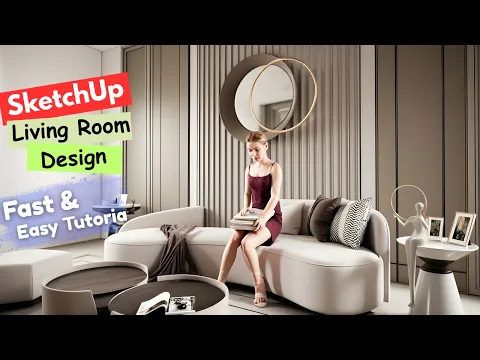
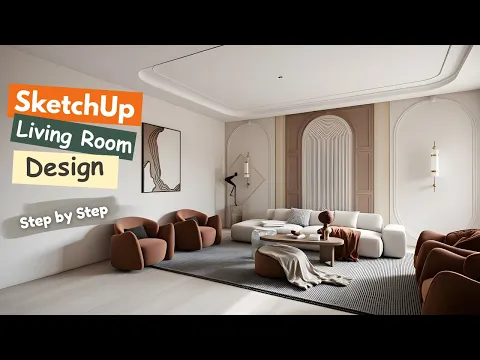
Curved Living Room Feature Wall in SketchUp | Step-by-Step
Build a curved feature wall for a modern living-room interior.
Watch on YouTube ↗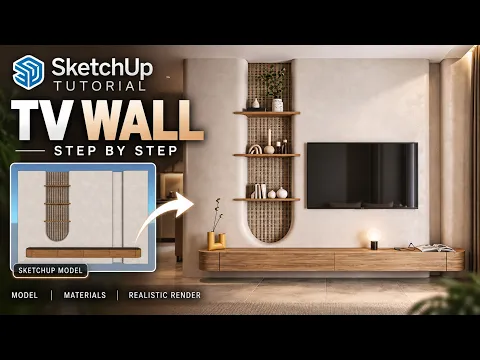
Don’t Model TV Walls the Slow Way — Use This SketchUp Workflow
Use an efficient modeling workflow for a detailed TV feature wall.
Watch on YouTube ↗Practice your SketchUp living room wall design workflow
Build three variations of the same feature wall using different panel rhythms. Keep the room and camera unchanged so the comparison focuses on proportion and material placement rather than unrelated decoration.
When reviewing your SketchUp living room wall design model, check the main views for overlapping objects, reversed faces, inconsistent texture scale and unnecessary detail. A useful presentation should explain the layout and design intent clearly. Keep your working file organized and save a separate presentation version if you need to test materials or export images.
Common modeling mistakes to avoid
- Editing loose geometry together with imported furniture instead of separating groups.
- Repeating detailed objects before checking the basic room proportions.
- Using textures at inconsistent scales or applying too many competing finishes.
- Changing the camera between design alternatives, making comparison difficult.
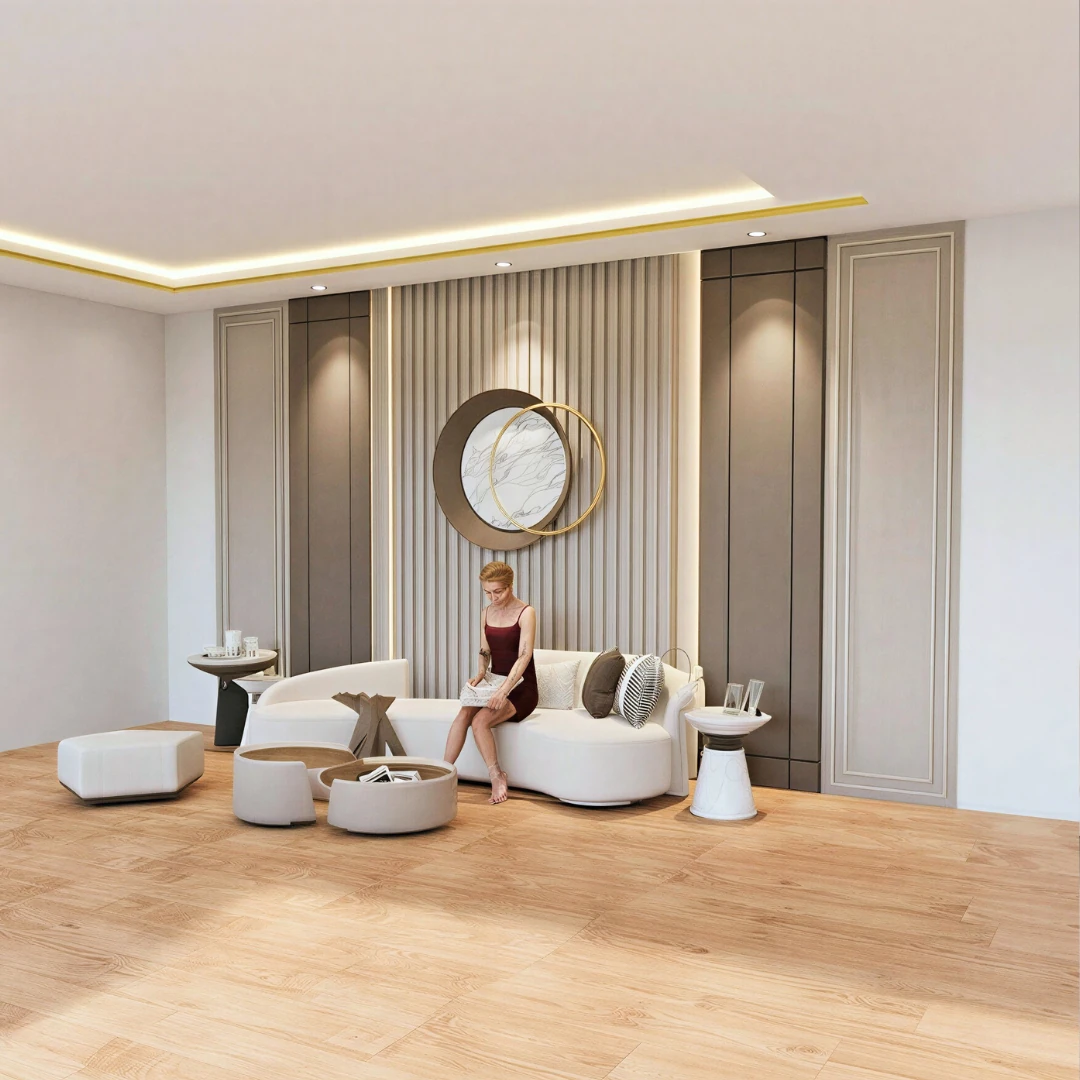
SketchUp living room wall design project previews
These images come from the existing project page. Use them to compare the overall composition and architectural details while following the lessons. Open an image in a new tab for a closer look.




Continue your SketchUp living room wall design learning path
For more practice, explore the related interior modeling project or browse our SketchUp tutorial library. If you need ready-made components for a scene, visit the SketchUp 3D model collection and check each model’s individual availability and terms. For guided learning, compare the online SketchUp courses.
Frequently asked questions
Does this tutorial include furniture modeling?
The original project focuses on architectural interior modeling. Ready-made furniture and accessories support the scene; the related videos may cover additional topics described on their cards.
Can I adapt the project to a different room?
Yes. Start with your own measured room shell, adjust the major proportions and test the layout before copying decorative details. Check dimensions and materials against your project requirements.
Is the SketchUp project file automatically included?
Watching a linked tutorial does not automatically provide its project file. Check the relevant video description or model listing for the current download option and any purchase or usage terms.