
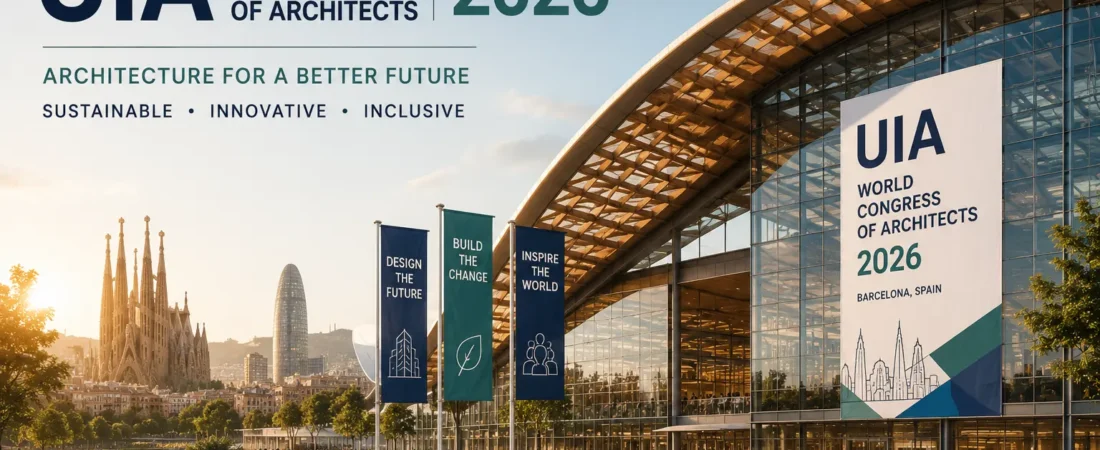
UIA World Congress of Architects 2026: Future Cities, Global Architecture, Sustainability & Design Innovation
The UIA World Congress of Architects 2026 is one of the most important international architecture events of the decade. Bringing together architects, urban planners, researchers, educators, policymakers, designers, technology innovators, and built-environment professionals from around the world, the congress serves as a global platform for discussing the future of architecture, sustainable development, future cities, urban resilience, climate-conscious design, digital transformation, and emerging technologies shaping the next generation of the built environment.

What Is the UIA World Congress of Architects 2026?
Organized by the International Union of Architects (UIA), the UIA World Congress of Architects is considered one of the most influential global gatherings in the architecture industry. The event brings together professionals from multiple disciplines to explore how architecture can respond to some of the most urgent challenges facing cities and communities today.
Unlike regional architecture events, the UIA Congress operates on a truly international scale. Discussions often focus on global issues including climate change, housing, urban growth, social inclusion, infrastructure, cultural identity, sustainability, public space, emerging technologies, and future architectural practice.
The 2026 congress is expected to attract thousands of participants from across Europe, North America, Asia, the Middle East, and other regions, making it one of the most significant architecture conferences of the year.
Why the UIA Congress Matters for the Future of Architecture
Architecture is entering a period of major transformation. Climate concerns, population growth, urban density, digital innovation, and changing social needs are forcing architects to rethink how buildings and cities are designed.
The UIA World Congress of Architects 2026 provides a global stage for discussing these challenges. Rather than focusing only on individual projects, the congress explores architecture at a larger scale—examining how cities, infrastructure, communities, and environmental systems interact.
This broader perspective is increasingly important because architecture today is closely connected to sustainability, technology, mobility, resilience, public health, and long-term urban development.
Major Themes Expected at UIA 2026
Smart urban development, resilient infrastructure, sustainable growth, and human-centered planning.
Net-zero architecture, environmental responsibility, circular construction, and climate adaptation.
AI workflows, digital design systems, BIM, visualization, and emerging architecture technologies.
International collaboration, education, cultural identity, and future professional development.
Future Cities and Urban Transformation
One of the central conversations expected at the UIA World Congress of Architects 2026 revolves around future cities. Urban environments continue to grow rapidly, creating new challenges related to housing, transportation, energy consumption, infrastructure, environmental impact, and public space.
Future cities must become more resilient, adaptable, sustainable, and inclusive. Architects increasingly play a strategic role in shaping not only buildings but also broader urban systems.
Discussions around smart cities, mixed-use development, mobility systems, public space design, and community-focused urban planning are expected to remain major priorities throughout the congress.
Sustainable Architecture and Climate Responsibility
Sustainability continues to be one of the strongest forces shaping contemporary architecture. Architects are under increasing pressure to design buildings that reduce environmental impact while improving quality of life.
The UIA Congress is expected to highlight topics such as low-carbon construction, adaptive reuse, passive environmental strategies, renewable energy integration, circular building systems, and resilient urban development.
Sustainable architecture is no longer viewed as a niche specialization. It is becoming a central expectation across residential, commercial, institutional, and public-sector projects worldwide.
AI, Digital Design, and the Future of Architectural Workflows
Artificial intelligence continues to transform architecture and design workflows. Architects increasingly use AI-assisted tools for concept development, visualization, design exploration, image generation, workflow automation, and presentation development.
Modern architectural workflows combine traditional design thinking with advanced technologies that accelerate decision-making and improve communication.
AI rendering, real-time visualization, image-to-3D workflows, and digital design systems are rapidly becoming part of everyday professional practice.
Designers interested in these workflows can explore:
Architectural Visualization Is Becoming More Important Than Ever
One of the strongest shifts across the architecture industry is the growing importance of architectural visualization. Clients, communities, stakeholders, investors, and public institutions increasingly expect projects to be communicated visually before construction begins.
High-quality renders, animations, diagrams, immersive presentations, and AI-assisted visualizations allow architects to explain complex ideas more effectively.
This is especially important for large-scale urban projects where communication and public understanding play a critical role in decision-making.
Architecture Events 2026: How UIA Connects with Other Major Global Events
The themes explored at the UIA World Congress of Architects 2026 are closely connected to broader conversations happening across other major architecture and design events throughout the year.
Related architecture events include:
-
London Festival of Architecture 2026
-
AIA Conference on Architecture & Design 2026
-
3daysofdesign Copenhagen 2026
Together, these events reveal how sustainability, future cities, urban resilience, architectural visualization, AI workflows, public space innovation, and global collaboration are becoming interconnected priorities across the architecture industry.
Why UIA 2026 Matters for Architecture Students and Emerging Professionals
The UIA Congress is also highly valuable for architecture students, young professionals, researchers, and educators. It provides direct exposure to global discussions that often influence future academic programs, professional standards, research priorities, and design methodologies.
Students can gain insight into emerging architecture trends, sustainability strategies, digital workflows, AI technologies, and evolving professional expectations.
Understanding these shifts early can help future architects build stronger skills and adapt more effectively to the changing demands of the profession.
SketchUp, Digital Design, and Professional Development
As architecture continues to evolve, practical digital skills remain increasingly important. Tools such as SketchUp continue to play a major role in architectural modeling, visualization, concept development, and presentation workflows.
Architects who combine design thinking with strong digital communication skills are better positioned to succeed in modern practice.
Professionals looking to improve these workflows can explore:
Final Thoughts
The UIA World Congress of Architects 2026 stands among the most important architecture events in the world. Its focus on sustainability, future cities, global collaboration, urban resilience, technology, AI-powered workflows, and architectural innovation reflects the direction of the industry as a whole.
For architects, students, urban planners, visualization professionals, and design leaders, the congress provides valuable insight into how architecture will evolve in the coming years.
As the built environment faces increasingly complex challenges, architects who embrace innovation, sustainability, technology, and human-centered thinking will be best positioned to shape the future.
Explore Advanced Architecture & Visualization Workflows
Discover professional SketchUp resources, AI-powered rendering workflows, visualization techniques, architectural tutorials, and advanced learning materials created for architects, designers, and 3D artists.