
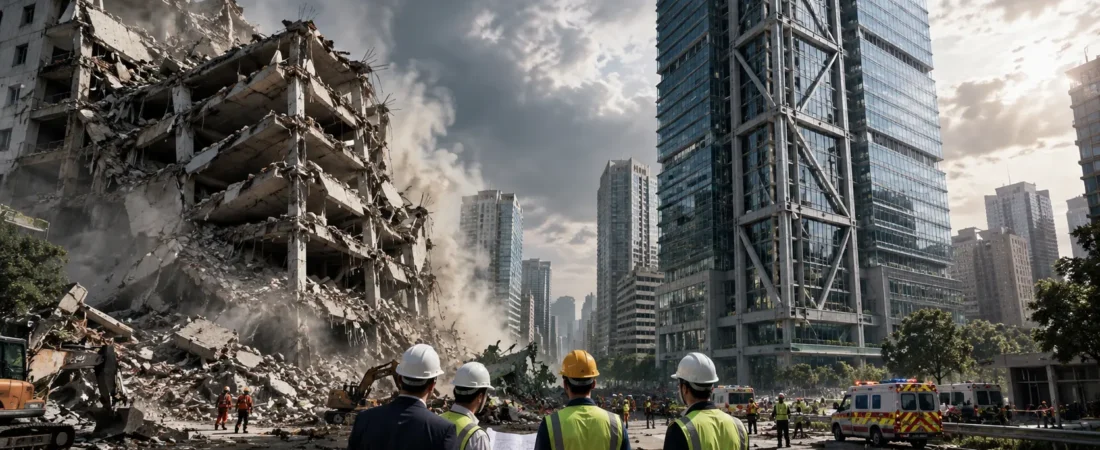
Earthquake-Resistant Design: What Architects Can Learn from the Venezuela Earthquake
Recent powerful earthquakes in Venezuela have once again highlighted the critical importance of earthquake-resistant design, structural engineering, and modern construction standards. As cities around the world continue to grow vertically, architects, engineers, and construction professionals must prioritize building safety and seismic resilience. The lessons learned from major earthquakes are not only relevant to Venezuela but also to every region exposed to seismic activity.

Earthquakes are among the most destructive natural disasters affecting the built environment. While earthquakes themselves rarely kill people directly, poorly designed buildings, weak structures, and outdated construction methods often lead to catastrophic failures. Modern seismic engineering focuses on protecting human life, minimizing structural damage, and ensuring that buildings remain functional after major seismic events.
Why Earthquake-Resistant Design Matters
Earthquake-resistant design is the practice of designing buildings and structures that can withstand seismic forces without collapsing. Modern engineering standards focus on absorbing, distributing, and dissipating earthquake energy through intelligent structural systems.
When buildings are designed according to modern seismic codes, they can significantly reduce casualties, protect investments, and improve community resilience. Countries that continuously update their building standards often experience far less structural damage compared to regions relying on outdated construction practices.
- Protect human lives during seismic events
- Reduce structural damage
- Improve building durability
- Minimize repair costs
- Increase property value
- Improve long-term safety and resilience
Why Some Buildings Collapse While Others Survive
One of the most common questions after major earthquakes is why some buildings collapse while others remain standing. The answer often lies in structural design, construction quality, materials, and compliance with engineering standards.
Older buildings may lack seismic reinforcement, proper foundations, ductile structural systems, and modern construction techniques. In contrast, newer buildings often incorporate advanced engineering solutions such as reinforced concrete cores, steel bracing systems, seismic joints, and energy-dissipation technologies.
Modern skyscrapers are specifically engineered to flex and move during seismic activity. This controlled movement helps reduce stress concentrations and prevents catastrophic structural failure.
Essential Principles of Seismic Architecture
Architects play a major role in creating earthquake-resistant buildings. While structural engineers perform calculations and analysis, architectural decisions significantly influence building performance during earthquakes.
1. Simple Building Geometry
Buildings with simple and symmetrical layouts typically perform better during earthquakes. Complex forms, irregular mass distribution, and sudden structural changes can increase seismic vulnerability.
2. Strong Structural Systems
Reinforced concrete frames, steel structures, shear walls, and braced systems are commonly used to resist earthquake forces and maintain structural integrity.
3. Quality Construction Materials
Using high-quality concrete, steel reinforcement, and certified construction materials is essential for long-term safety and seismic performance.
4. Proper Foundation Design
A building is only as strong as its foundation. Geotechnical analysis and proper soil investigation help engineers design foundations capable of resisting seismic movement.
The Role of Technology in Modern Building Design
Technology is transforming the way architects and engineers design safer structures. Modern software allows professionals to model, analyze, and visualize building performance before construction begins.
SketchUp has become one of the most widely used design tools for architects, interior designers, and construction professionals. Through accurate modeling and workflow optimization, designers can develop better concepts and coordinate projects more efficiently.
Learn More About SketchUp Workflows →
Advanced visualization tools also help project teams understand structural systems, identify potential issues, and communicate design intent more effectively.
How Artificial Intelligence Can Support Safer Design
Artificial Intelligence is becoming increasingly valuable in architecture and construction. AI-powered tools can help accelerate concept development, optimize workflows, improve visualization quality, and assist designers during early project stages.
Although AI cannot replace structural engineers, it can support decision-making, improve project coordination, and help professionals evaluate multiple design alternatives more efficiently.
Explore AI Tools for SketchUp →
Lessons Architects Can Learn from the Venezuela Earthquake
The recent Venezuela earthquake serves as a reminder that resilient design is no longer optional. Population growth, urbanization, and climate-related risks continue to increase pressure on cities worldwide. Architects and engineers must design with safety, durability, and resilience in mind.
Future-ready buildings should prioritize:
- Compliance with modern seismic codes
- Quality structural engineering
- Regular building inspections
- Advanced modeling and visualization tools
- Collaboration between architects and engineers
- Continuous professional education
Frequently Asked Questions
What is earthquake-resistant design?
Earthquake-resistant design refers to architectural and engineering strategies used to help buildings withstand seismic forces and reduce the risk of collapse.
Can modern skyscrapers survive major earthquakes?
Yes. Many modern skyscrapers are specifically designed with seismic-resistant structural systems that allow them to absorb and dissipate earthquake energy.
What causes buildings to collapse during earthquakes?
Common causes include poor construction quality, outdated design standards, weak foundations, and insufficient structural reinforcement.
Can AI improve architecture and engineering workflows?
AI can support visualization, concept development, workflow optimization, and project coordination, helping professionals work more efficiently.
Final Thoughts
The Venezuela earthquake is a powerful reminder that resilient architecture and structural engineering save lives. As technology advances, architects and engineers have more tools than ever before to create safer buildings, smarter cities, and more sustainable communities. By combining modern design principles, engineering expertise, digital workflows, and emerging technologies, the construction industry can continue improving building safety around the world.
Build Better, Safer and Smarter Projects
Discover professional SketchUp workflows, AI-powered design tools, rendering training, and architectural resources from Nice Tower.